
Social and Environmental
Research Institute

278 Main Street, Suite 404, Greenfield, MA 01301
phone: 413-773-9955, fax: 530-348-7325, e-mail:

spacerspacer
spacerspacerspacer
spacer spacer

The Social and Environmental Research Institute conducts research on a broad range of social and environmental issues, while emphasizing topics related to discursive approaches to policy and social relations to the environment. The Institute conducts applied research projects that realize the practical gains provided by theory and that act as a means to realize concrete benefits to individuals, society, and the environment. SERI was founded in 1995 as a non-profit research institute.

Latest News

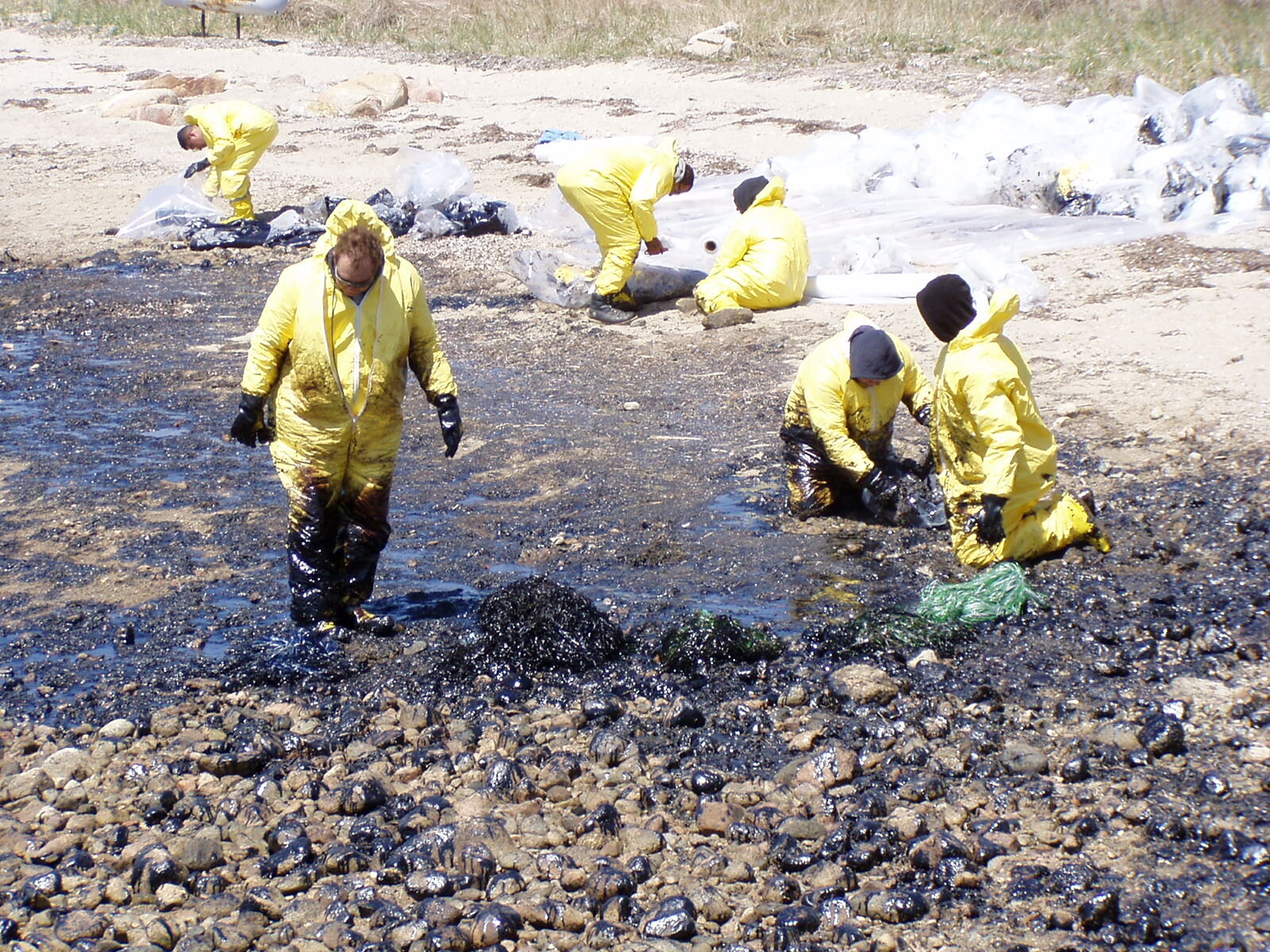
  • We received funding for a new project to study the social and economic impacts of oil spills. Funding for the two year project, entitled Social disruption from oil spills and spill response: Characterizing effects, vulnerabilities, and the adequacy of existing data to inform decision-making is from the Coastal Response Research Center at the University of New Hampshire. (more).
  • An article entitled Selecting the Right Tool for Evaluations: Guidance for Community Involvement Practitioners was published by EPA in its EPA Public Involvement Network News issue from winter 2008. Download the article or read the entire newsletter.
  • Guidance documents aimed at practitioners describing how to use Q method and focus groups are now available. They provide detailed discussion of how to use these methods for gathering feedback about community involvement efforts and stakeholder preferences for clean-up at Superfund sites. These guidance documents were developed as part of our project on empowerment and evaluation (more).
  • SERI board member Tom Webler spent the Winter of 2007/2008 on a Fulbright Scholarship in India. He taught a class on human dimensions of conservation biology to Masters students in the Environmental Sciences Department at Pondicherry University. The class ran side-by-side with a class on the Ecology of Conservation Biology. The goal was to expose students to how understanding the social, psychological, and cultural aspects of biodiversity protection can help them be more effective conservation biology practitioners. He also integrated the teaching with ongoing field research in the nearby local community of Auroville.
  • SERI board member Seth Tuler spent the winters of 2006 and 2007 in Bangkok, Thailand leading a study abroad program for undergraduates from Worcester Polytechnic Institute.
  • Research Themes

    PUBLIC PARTICIPATION IN ENVIRONMENTAL AND RISK ASSESSMENT AND DECISION MAKING

    The Institute conducts research on public participation in environmental and risk assessment and decision-making at all stages of policy processes, including design, research, decision making, implementation, and evaluation. Our research in this area aims to improve understandings and develop processes that seek just, equitable, and integrative solutions by deliberating issues; clarifying interests and values; informing deliberations with high quality information; addressing issues of power and influence; discovering common understandings; identifying mutual responsibilities; and negotiating shared principles. It includes both development of theories of public participation and guidance for design of processes that are sensitive to the specifics of situational contexts.

    We have conducted a series of research projects to investigate the ways that context matters in preferences for process features and the ways that preferences for process are linked to preferences for outcomes, including

    • the factors that influence local government officials' decisions to participate in regional watershed planning (more) and

    • the inter-relationships of people's preferences for process features, preferences for outcomes, perceptions of the context, and their personal experiences and motivations in environmental and risk decision-making (more).

    A second stream of research relates to how different people define 'success' of public participation. There are a variety of ways that 'success' can be defined. It depends on who is doing the defining and the context. Development has theory has been an important component of our work, with its basis on the normative criteria of fairness and competence (as described initially in a book co-edited by Tom Webler). Our empirical work on this topic has included:

    • how participants in a forest planning process define 'good' process (more);
    • how stakeholders think ecological risk assessment workshops for oil spill response planning should be organized (more); and
    • evaluation of the substantive impacts of the Sustainable Rural Community Development Project in Vermont and the public involvement processes the project used (more).

    Recently we have focused attention on the role of evaluation for improving process and for empowering interested and affected parties to be more effective participants. In particular, we are comparing the ways that different evaluation techniques empower local communities to be more effective participants in the clean-up of contaminated sites (more).

    A list of theoretical and empirical research publications on public participation may be found by following this link.

    SOCIAL DIMENSIONS OF RISK

    The Institute's research on the social dimensions of risk explores the ways that social and institutional factors affect the risks from hazardous technologies. These factors can include individual risk perceptions, social networks, and organizational behaviors. In addition, our work explores the effects of risk management efforts, and opportunities for their improvement. We are particularly interested in translating the findings of research into decision making to address environmental exposures.

    The social dimensions of risk have been investigated in several recent projects, including:

    • community responses to risk communication and the role of social networks in the formation of risk perceptions about low dose radiation exposures (more);
    • public health risks from Department of Energy nuclear weapons facilities and nuclear testing fallout (more);
    • the human dimensions of wildland fire (more); and
    • marine oil spill response (more).

    A list of publications related to the social dimensions of risk may be found by following this link.

    VULNERABILITY AND ENVIRONMENTAL CHANGE

    The Institute conducts research on vulnerability and environmental change in a variety of policy domains, including marine fisheries, coastal ecosystem management, and wildland fire management. Our research in these area develops understandings of the driving forces that exacerbate social and ecological vulnerabilities to hazards and management responses to them. Our work has been conceptual, by exploring the relevance of, for example, vulnerability in fisheries management. Our work has also sought to develop methodologies for improving assessments of vulnerability and environmental change.

    The Institute's work on vulnerability has been focused on New England marine fisheries. Those engaging in fishing-related activities and the communities in which they live face many and varied pressures. Declining fish populations and the associated regulatory responses impose constraints on fishing activities and can exacerbate economic and social pressures on fisheries stakeholders. Other factors such as increasing coastal development and shifting demographics have brought additional threats to the sustainability of fisheries and those dependent on them. A large number of factors - or driving forces - may contribute to individual and group vulnerability. Our work is investigating the utility of considering vulnerability in the assessment of potential impacts from fisheries management measures (more).

    Additionally, the Institute has engaged in projects related to the role of models in assessing impacts of nitrogen loading in coastal embayments, with a focus on how models may be transferred from one ecological and social context to another (more). For example, we explored how local officials use nitrogen loading models in local decision making and how scientists (modelers) view the information requirements of local decision makers.

    A list of publications related to vulnerability and environmental change may be found by following this link.