Designing a local process
A decision to host a nuclear waste facility is likely to raise many questions among residents that have strong and varied opinions. It will be vital for the community to create a space for learning and discussion that is judged to be fair, transparent, capable, and considers the best available information.
Here we offer some guidance about how to design such a process. This guidance is drawn from our extensive experience in working with community officials and residents as they contemplate making difficult choices about hosting facilities that bring both risks and benefits and can have profound implications for the evolution of their community.
Establish a set of principles for the engagement process
Principles define what good engagement aims to be and are widely used in public participation. Principles for effective public engagement include:
Inclusivity and diversity - engage all affected and interested groups
Transparency and openness - clear information sharing and accessible processes
Meaningful influence - participants can genuinely affect outcomes
Early and careful planning - purpose and design match the context
Collaboration and shared purpose - foster mutual respect and shared goals
Learning and adaptability - adapt and respond to public input
Sustained engagement - support ongoing participation
-
Some 15 years ago Canada embarked on an effort to site disposal sites for SNF. They created a Nuclear Waste Management Organization (NWMO) whose efforts rested on the concept of informed consent and a set of Core Principles Guiding Public Engagement and Decision-Making. While some have applauded and others have criticized the NWMO’s success in implementing them, they nevertheless are instructive for what should be sought.
1.Ethical Foundation for Engagement
These principles guide planning, engagement, and decision-making at NWMO, including how public input is sought and used:
• Respect for life in all its forms: Minimize harm to both humans and other sentient beings.
• Respect for future generations and the biosphere: Account for long-term impacts on people and the environment.
• Respect for peoples and cultures: Value diverse cultural perspectives, knowledge, and experience.
• Justice: Strive for fairness across different groups, regions, and generations. (nwmo.ca)
• Fairness to all affected: Ensure that engagement and outcomes consider the interests of everyone impacted
• Sensitivity to diversity of values: Recognize that individuals and groups bring differing values and interpretations, and engagement should be responsive to these differences. '
2.Community-Driven and Inclusive Engagement
• Informed and willing host community: Engagement must ensure that local communities understand the project, its implications, and are truly willing to participate.
• Siting process led by communities: Communities decide whether and how to proceed through each stage with NWMO support.
• Inclusiveness: Those likely to be affected—including neighboring communities, provincial governments, transportation-related stakeholders, and Indigenous Peoples—must have full opportunities to express their questions, concerns, and aspirations.
• Right to withdraw: Communities may withdraw from the process until final agreements are signed, ensuring engagement is voluntary.
• Support for capacity building: NWMO provides assistance so communities and stakeholders can meaningfully participate (e.g., independent advice, peer review, resources for local engagement).
3. Shared and Transparent Decision-Making
• Shared decision-making: Potential host communities and NWMO collaboratively develop criteria and assess effects throughout the process.
• Informing the process: Decisions must be grounded in the best available knowledge—science, social science, Indigenous Knowledge, and ethical analysis—and information should be transparent and accessible
• Ongoing engagement with governments: Provincial governments and other levels of government are engaged as part of a broad, transparent dialogue.
4. Focus on Safety, Well-Being, and Ethical Standards
• Safety first: Engagement processes (and the outcomes they inform) must prioritize protection of people and the environment.
• Community well-being: Engagement and ensuing decisions should aim to foster the long-term well-being and quality of life in affected communities.
-
The International Association for Public Participation is a practitioner-based group that promotes excellence. They have prepared a list of seven core values. These describe what good public participation looks like. They are the principles that define a legitimate process.
Those affected by a decision have a right to be involved.
Public participation includes the promise that the public’s contribution will influence the decision.
Public participation promotes sustainable decisions by recognizing and communicating the needs and interests of all participants, including decision-makers.
Seek out and facilitate involvement of those potentially affected or interested.
Seek input from participants in designing how they participate.
Provide participants with the information they need to participate in a meaningful way.
Communicate to participants how their input affected the decision.
Code of Ethics for those professionals running public engagement processes:
Practitioners enhance public participation and help decision-makers be responsive.
Actions should build trust and credibility in the process.
Clearly define and communicate the public’s role.
Ensure openness and access to relevant information.
Avoid strategies that divide or polarize.
Advocate for integrity of engagement (not for any single outcome).
Honor all commitments made to the public.
Bring in professional public participation practitioners

Photo by Vitaly Gariev on Unsplash
Your engagement experience will likely be much more satisfying and effective if professionals are brought in to help design and run the process. They have experience working with many types of communities on many types of issues, including nuclear waste. Public participation professionals will help to ensure that your community is served well by a process that engages meaningfully.
We recommend beginning by brainstorming a list of all the topics that your community will want to know about. Then work to develop a list of individuals or groups who could help inform your community about these issues. Keep in mind that some of the best people may be in your community. For instance, on the topic of economic development it may be helpful to hear from a university professor who does economic modeling for many types of issues. It may also be helpful to hear from local business owners who are familiar with specifics about the local economy. Retired political leaders may also have insights to consider. Our point is that, while outside experts are valuable sources of knowledge, local people are experts too. Some may be scientists, but others will have expertise based on their experience of living and working in the community.
Draw on multiple sources of knowledge
The community should draw on both expert knowledge and local knowledge to identify impacts. Keep in mind that it is important to identify both what impacts people are worried about and what impacts scientists or professionals say people should be worried about. Risk perceptions of lay people do not always match those of experts, but that does not mean the risks that lay people care about are unimportant.
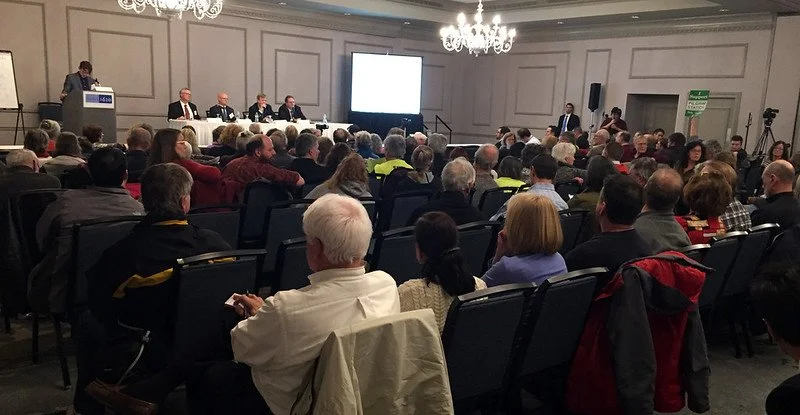
Public Meeting in Plymouth, Mass. about the Pilgrim Nuclear Power Plant. Source: Nuclear Regulatory Commission
Finally, we want to point out that Native American people have a wealth of knowledge based on their experience of living on the land for many generations. Again, while some may be qualified scientists, politicians, or business people, they may also have traditional knowledge that is relevant to the decision. The Canadian Nuclear Waste Management Organization recognized this and held workshops that sought to collect this “indigenous knowledge” and also integrate it with western science.
Consider the role of power and authority in decision making
A key question to resolve is: Who makes the decisions? If, as many have recommended, your community choses to endorse the principle of voluntary informed consent, this question becomes, “Who consents for whom?”
We caution that it likely will not be sufficient to leave decisions up to a small board of elected politicians. These individuals may be highly regarded, but they may be challenged to consider all the facts and concerns at play. Furthermore, they may have interests that are not fully consistent with those of others in the community. For example, local elected officials may be motivated to encourage economic development and increase local tax revenues, while other community members may emphasize other goals. Finally, local officials that are elected may step down or be un-elected and their policies and decisions may be changed by those who take their positions. The result is that, without broad-based agreement within the community, decisions may not be stable.
Communities in Canada considering hosting a waste facility have opted to use majority vote in a public referendum to make the final decision. There are pros and cons of this approach. On the one hand, voting is customary in democratic societies and often accepted as a way of reaching agreement on action. On the other hand, majority vote can mean that significant minority positions lose out. If this minority is a group that will bear more of the risks of the facility and receive fewer of the benefits, then this would be widely viewed as unfair and morally inappropriate. Another principle your community might adopt is that those who bear most of the risks ought to have a stronger say in the decision.
Co-design the facility
A nuclear waste facility is more than the physical location and infrastructure. It is a system that includes a series of activities, including transportation of the materials, unloading of casks, placement of casks, monitoring of casks, and emergency response services.
While there will be many technical design issues that should be based on sound engineering expertise, there will also be aspects of the system that a potential host community is well-positioned to weigh in on, such as:
Where will access road go?
When can trucks operate through town?
How many trucks a day will be allowed?
Where will emergency response equipment be located?
What upgrades might be important to mitigate impacts in the community from transportation of heavy vehicles and casks?

Photo by Pedro Miranda on Unsplash
Co-design is a collaborative process in which community members work together with the authorities to bring local ideas and preferences into the design process. Rather than assume that “this is their project and they’ll do it their way,” consider that this facility can sit on the landscape of your community in many different ways and, once it is built, it will be very difficult to make changes. For instance, communities will likely want to minimize noise from the facility, which can be done by vegetative cover or embankments or even noise reflecting walls. Realize that the organization building the facility may not place high level concern onto aspects that create annoyances to the local people – e.g. noise, lighting, visibility).
It is also important to consider if the community may want to be involved in co-design activities of different phases of project including operations and decommissioning.
Design an inclusive process that considers all concerns
Any assessment of risks and benefits from a potential nuclear waste facility should deal with three topics:
Identify the important risks and benefits of concern to people, groups, and organizations potentially affected by a facility.
Identify who will likely reap the benefits and bear the risks from hosting a facility. Include a way to reveal the vulnerabilities and disproportionate impacts to sub-groups within an area.
Develop strategies to mitigate undesirable impacts and secure benefits?
Identify the possible risks and benefits that could come from hosting the facility
We recommend brainstorming about six categories of potential benefits and risks to organize impacts: health and safety, economic, environmental, social, governance, and cultural. We also recommend seeking input about these issues from multiple people and groups, including:
Local residents and organizations
Experts from inside or outside of the community
Regional organizations and stakeholders
Reports and other published literature from credible sources
Government agency staff
The webpage Becoming informed about the facility and its benefits and risks elaborates questions that can be asked to dig into these topics more deeply.
We recommend that the assessment of possible risks and benefits be done in a two step process.
First, brainstorm what they might be. Be inclusive. It is important to resist the urge to self-censor. The purpose of brainstorming is to capture all the possibilities.
Second, gather the information that will enable the community to assess the significance of each risk and benefit, as well as how they are distributed amongst people, groups, businesses, government agencies, and other organizations within the community.
Assess the significance of the risks and benefits that could come from hosting the facility
A community assessment about risks and benefits will require time and resources. Information will need to be gathered, shared, and discussed. Some principles for designing a process to achieve these activities is discussed above in the section on Principles for the engagement process and the capacities in the community that will be called upon are discussed in the webpage on Building community civic capacities for effective engagement in a nuclear waste facility siting process.
Here we highlight an additional need: Consider who will reap the benefits and who will bear the costs; this is a question about the distribution of risks and benefits.
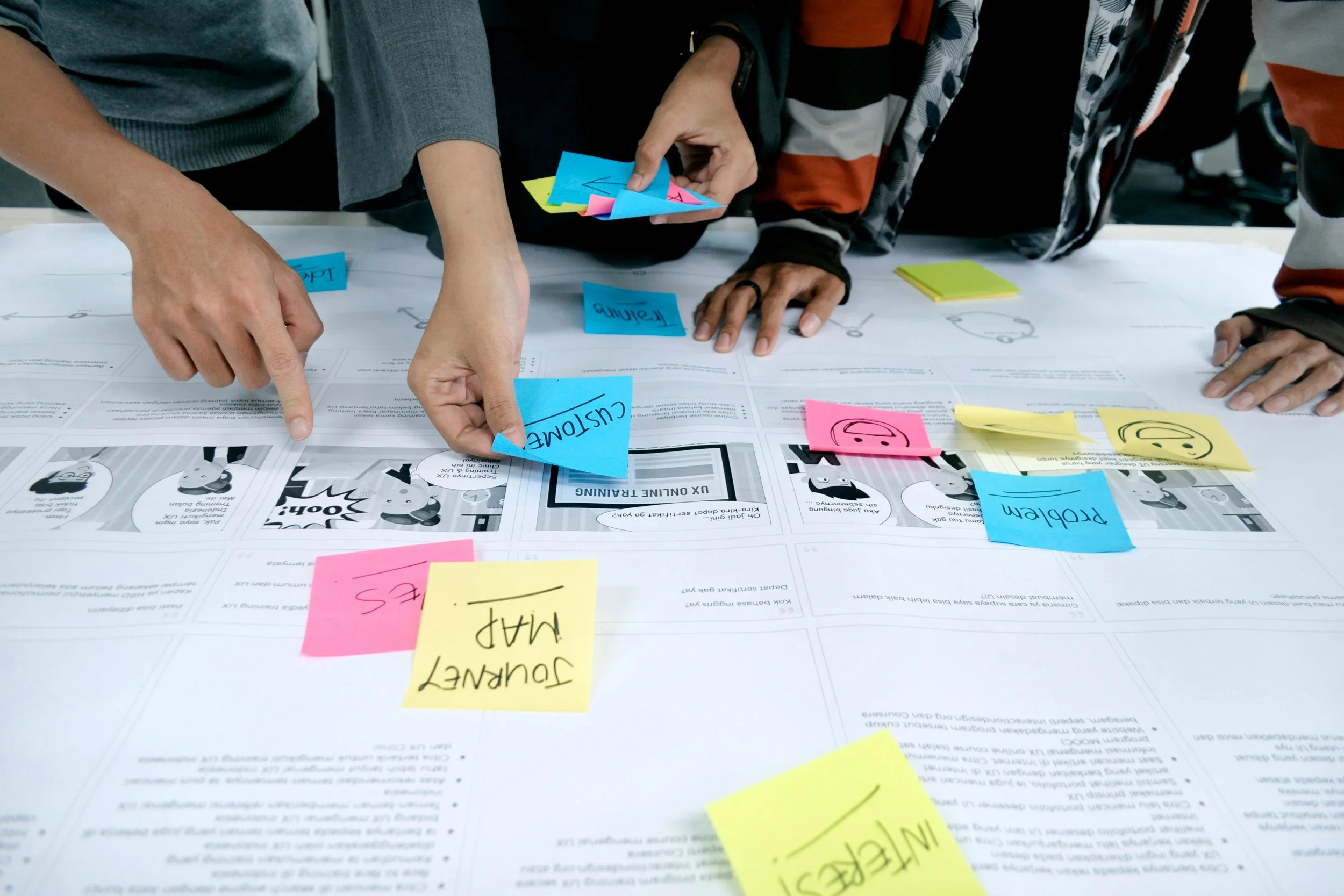
Photo by UX Indonesia on Unsplash
Make a list of all the types of people, groups, and organizations that could possibly benefit or be harmed
We recommend thinking broadly. The idea is that it is important to anticipate the concerns and preferences from all types of people, groups, and organizations that have a stake in the decision. Some have referred to these generally as interested and affected parties (IAPs). Others use the term potentially impacted party (PIP). The more thoroughly that interested and affected parties are identified the more likely that strategies can be found to help mitigate risks and conflicts and to craft community benefit agreements (see below).
Examples of people, groups, and organizations that could possibly benefit or be harmed include:
| Individuals | Types of Groups | Organizations | Government |
|---|---|---|---|
| Residents | Households and Families | School districts | Local government departments and boards |
| Local vendors | Ethnic groups | Chamber of Commerce | |
| Permanent workers at the site | Neighborhoods | Other business and industry groups such as tourism, construction, recreation, housing, etc. | |
| Temporary workers | Religious groups | Non-governmental organizations (NGOs), such as environmental groups, hunting & fishing clubs, land trusts, housing cooperatives, cultural organizations, and social service groups | |
| Tourists | Local businesses and industry |
The table below illustrates a way to organize information about who might be impacted by potential benefits and risks:
| Health and Safety | Economic | Environmental | Social | Governance | Culture | |
|---|---|---|---|---|---|---|
| Individual Residents | ||||||
| Social Groups | ||||||
| Businesses and Industry | ||||||
| Non-Governmental Organizations | ||||||
| Government Agencies | ||||||
| Etc. |
Two additional important considerations are
Who is more or less vulnerable to the risks? Vulnerability is a function of how much a person or group is exposed to a threat and how sensitive they are to the potential harm. Factors that can affect vulnerability are listed in the table below.
How are risks and benefits distributed across the community? Some individuals and groups may be in a position to gain more from a decision to host a facility. Others may experience additional risks.
Kinds of factors that influence vulnerability:
| Individual aspects | Attributes of people: age, gender, ethnicity, health, ethnicity, language, skills, flexibility, education, experience, and willingness to take risks. |
| Social conditions | Attributes of social networks and social relationships: number of dependents, structure of family, membership or affiliation with social network, number of social service organizations in community, differential entitlements and access to resources, access to affordable, timely healthcare and effective emergency preparedness and response systems absence of social support mechanisms |
| Economic conditions | Attributes of the economy and economic aspects of entities: flexibility, dependency on a single industry or employer, state of unemployment, market condition, debt, access to credit, etc. |
| Institutional characteristics | Attributes of institutions: robustness, resilience, connectedness. |
| Governance aspects | Attributes of government: staffing levels, regulatory environment, available financial resources, etc. |
| Cultural aspects | Customs and core beliefs/behaviors of communities: subsistence activities, recreational activities, etc. |
| Technological aspects | Novelty of the technology, risk of catastrophic failure, ability to mitigate or replace the technology. |
| Ecological components | Attributes of the natural ecological system: geographic location, proximity to danger, marine productivity, exposure to natural hazards, etc. |
Negotiate a community benefits agreements
Virtually no one expects a community to agree to host a nuclear waste facility without receiving significant benefits from doing so.
Community benefit agreements (CBA) are meant to compensate for the risk burden. They are legally binding and enforceable contracts. A CBA specifies what the community will receive in return for hosting the facility. It likely also lays out the community’s responsibilities and rights. It is advisable that your community hire experienced legal experts to negotiate the CBA. Here we list some of the likely items to consider including in the agreement:
• Financial payments to the community (amounts, timing, duration)
• How the financial payments will be distributed within the community
• Agreements about hiring and purchasing to privilege local community
• Training and apprentice programs
• Protections for community health
• Environmental protections
• Power to shut down the facility if it believes it to be in noncompliance
• An escrow fund for decommissioning, and legal assurances regarding decommissioning as well as CSF-related emergency preparedness and response
The CBA may also be accompanied by a local ordinance or state law that specifies who controls the money, how it is spent, and what happens if a party is suspected of being in noncompliance with the contract.
Further information on negotiating a CBA is available here,
The hosting agreement between the Town of Ignace, Canada and the NWMO is available here.
This website was created with funding from the US Department of Energy.