Policy context for managing spent nuclear fuel and high-level waste
The Federal Government continues to seek a way to manage spent nuclear fuel and high-level radioactive waste
Under current law, the federal government is required to dispose of spent nuclear fuel (SNF) and high-level radioactive wastes (HLW) permanently in a deep geological repository. The main US laws are the Nuclear Waste Policy Act (1982), Nuclear Waste Policy Act Amendments (1987), and the more recent Consolidated Appropriations Act (2021).
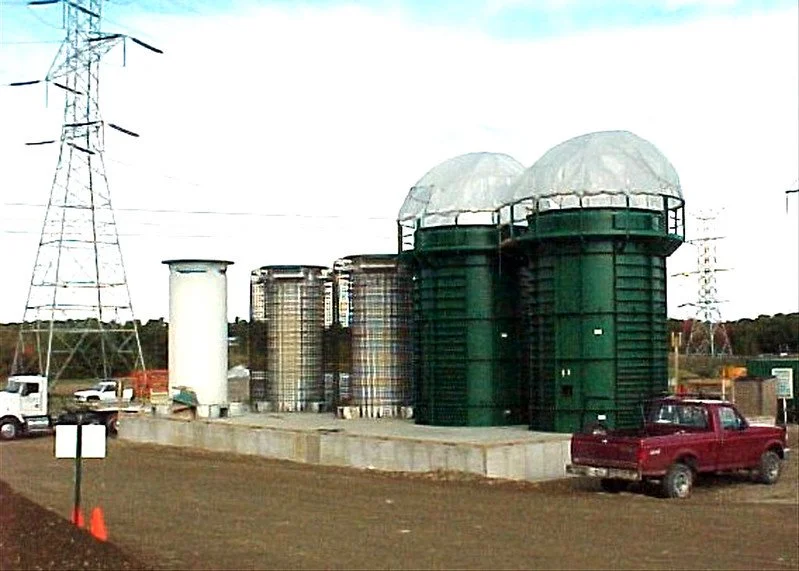
Spent Fuel Casks. Source: Nuclear Regulatory Commission
-
Nuclear wastes come in many different forms. All these wastes are threats - in varying degrees - to human health. However, they can all be managed safely.
Low level radioactive wastes (LLRW) come from medical and industrial uses as well as from nuclear power plants and from nuclear weapons manufacturing facilities. These are ranked as Class A, B, or C. They emit dangerous levels of radiation for tens to hundreds of years and are managed by burying in special landfills. In the past, some LLRW has been buried in municipal trash landfills. Today, LLRW is regulated by the NRC and must be disposed in a licensed commercial LLW landfill. There are presently four of these operating in the USA in Washington, Texas, South Carolina, and Utah. (39 states are “Agreement States”, meaning they have met requirements set by NRC to manage LLRW in their states.)
High level wastes are wastes from spent nuclear fuel (SNF), from reprocessing SNF, and from nuclear weapons production. SNF is used reactor fuel that has been irradiated to the point where it is no longer efficient in sustaining a nuclear chain reaction. Despite being “spent,” it remains highly radioactive and thermally hot. These remain dangerous for millions of years and must be isolated from people, the environment, and - importantly - water for very long timelines. Yucca Mountain was intended to be the location of one DGR, but it was abandoned. Presently the USA has no plan for how to dispose of HLW. SNF is stored at power plants where it was generated. Other high-level waste from the weapons programs are stored at DOE labs across the country.
Greater Than Class C (GTCC) wastes are wastes that are neither low level nor high level. There is presently no legal pathway to dispose of GTCC wastes, but they are expected to be put into the DGR with high level wastes.
Uranium mill tailings are wastes from mining uranium. These are managed in special landfills.
Transuranic wastes are radioactive wastes made in the nuclear weapons program. These remain dangerous for hundreds of thousands of years and are presently disposed of in a deep geological repository in southern New Mexico, called the Waste Isolation Pilot Project (WIPP).
This document only addresses high-level radioactive waste management.
-
The Department of Energy (DOE) is a cabinet-level agency of the federal government responsible for promoting nuclear power and managing nuclear waste. It is also responsible for the design and manufacture of nuclear weapons. It has other non-nuclear programs as well.
The Department of Energy operates 17 National Laboratories in states across the USA. The National Renewable Energy Lab in Golden Colorado focuses on renewable energy. The National Energy Technology Lab in Pittsburgh focuses on fossil fuels. Many other labs focus on developing, building, and testing nuclear weapons and nuclear power technologies. For instance, Idaho National Laboratory has a reactor test site where new types of nuclear reactors are built and tested. This also is the location where SNF from the US Navy is stored (temporarily - awaiting a DGR). Los Alamos National Lab is the place where Robert Oppenheimer led the Manhattan Project and detonated the world’s first atomic weapon, back in 1945.
-
The Environmental Protection Agency sets radiation exposure standards for the nation. These apply in medical and industrial settings, at nuclear power plants, in drinking water, and at nuclear waste disposal facilities. When the US does develop a DGR for high-level wastes the health-protection standard will be determined by the EPA.
The Nuclear Regulatory Commission (NRC) is an independent federal agency responsible for ensuring the safe operation of nuclear facilities. It sets standards for commercial reactors that will achieve the EPA exposure limits. It establishes regulations for the design, construction, operation, and decommissioning of nuclear power plants. While nuclear power plants are operating, NRC inspectors make regular visits to ensure the plant is operating safely. Any safety violations are litigated and mitigated. When the US does develop a DGR for high-level wastes, that facility will be licensed and regulated by the NRC, but it will be operated by the DOE.
The Department of Defense is responsible for nuclear reactors on navy vessels and for the storage and maintenance of nuclear weapons and the associated wastes.
There is no permanent repository for SNF or HLW in the US. Efforts to find a permanent solution go back decades and they have all failed to find a suitable and acceptable site. Presently, almost all SNF is stored at sites of licensed commercial nuclear reactors, either in casks outside the reactor dome or under water in large spent fuel pools. The pools help keep the fuel from melting. The SNF that was generated at closed nuclear power plants is still located on the sites in temporary storage. Most HLW is contained with various technologies at DOE laboratory facilities.
The Nuclear Waste Policy Act (NWPA) of 1982 obligated the federal government to begin to dispose of commercial SNF in1998. (The precise language in 42 U.S.C. § 10222(a)(5) reads that contracts shall provide that the Secretary, "beginning not later than January 31, 1998, will dispose of the high-level radioactive waste or spent nuclear fuel involved.") It laid out a process to find multiple sites for deep geologic repositories (DGR) and funded this with a tax on nuclear powered electricity. Investigations were conducted around several locations in the United States to determine their technical feasibility for a deep geologic repository. While there appeared to be suitable sites, none were politically successful. The latest effort was at Yucca Mountain, Nevada. The 1987 amendments to NWPA stipulated that Yucca Mountain would be the only deep geologic repository developed in the US. However, it would still take many years before the repository could be built. Extensive scientific investigations into the rock were needed, an environmental impact assessment report would be prepared, the Environmental Protection Agency (EPA) had to develop safety and environmental standards, the Department of Energy (DOE) had to prepare a license application, and the Nuclear Regulatory Commission (NRC) needed to review and approve of this license to construct and operate it.
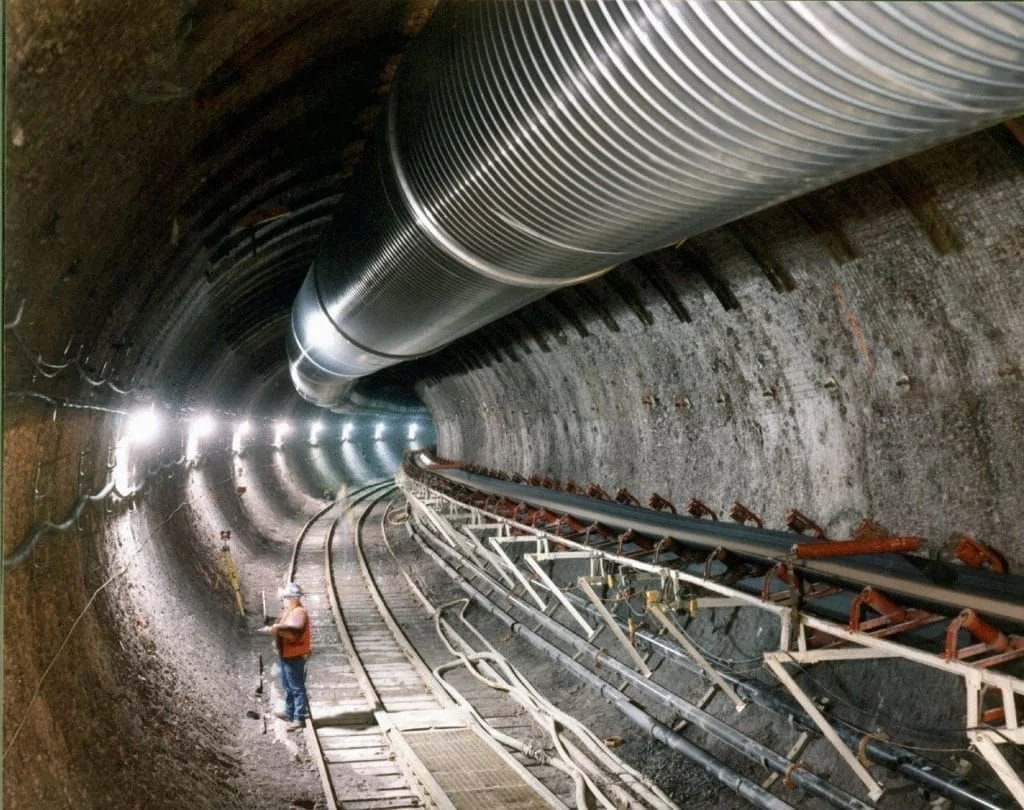
Yucca Mountain in Nevada. Source: Nuclear Regulatory Commission
During this time, politics played out as Nevada tried to stop the project. The G. W. Bush Administration in 2002 declared that Yucca Mountain would be the site for the repository and the DOE submitted a license application to the Nuclear Regulatory Commission.
However, Nevada ultimately prevailed in its opposition and the NRC stopped reviewing the license application. Because the law has not changed, Yucca Mountain is legally still the one and only site for a deep geologic repository for SNF and HLW in the country. At present, it is widely agreed that politics have effectively killed Yucca Mountain. Meanwhile, Congress has made no progress on changing the law or restarting the program to find one or more DGRs.
Consequently, the federal government is in non-compliance with the law that required it to remove and dispose of the SNF at nuclear power plants by February 1998. Every few years, reactor owners sue the federal government and win compensatory funding. To date, the federal government has paid $12 billion in penalties to the private companies that hold the licenses to the nuclear power plants where the waste is stored.
-
Very little of the uranium fuel is actually “used up” in a reactor. But after a few years it is so contaminated with waste products (called fission products) that it needs to be replaced. It is technically possible to remove the still-good uranium, but it is expensive and it also separates out plutonium, which can be used to make nuclear weapons. Some of this plutonium can be used in specialized reactors, but not in our current reactors.
The US attempted to establish a commercial reprocessing operation of SNF at West Valley, NY from 1966-1972. In 1975, under increasing concerns about the proliferation of nuclear weapons, President Ford restricted reprocessing operations. President Carter ordered the commercial SNF reprocessing halted in 1977, although research into reprocessing was still funded. While President Reagan reversed Carter’s order, no company has been willing to start up reprocessing again. The Trump Administration is now promoting research and development of this technology. The legacy of past efforts to reprocessing spent nuclear fuel remains; The West Valley site was badly contaminated and the DOE has been in the process of remediating the contamination and moving the wastes to DOE Labs. Clean up continues today and is expected to last for several more decades.
While the technology to extract usable uranium from SNF is proven, there are significant downsides to employing it: (1) it produces more expensive fuel, raising the price of electricity; (2) it produces precursors to nuclear weapons that need to be guarded by the military and eventually disposed of; (3) a deep geological repository is still required to safely dispose of other radioactive materials; and (4) it is very expensive. While other technologies to reprocess SNF are proposed or in development, these have not been proven that they can work at scale or economically.
In an effort to break the DGR siting impasse, President Obama formed the Blue Ribbon Commission on America's Nuclear Future and gave it the mission to develop a path for managing the existing and future nuclear waste stockpile. The Blue Ribbon Commission recommended that the federal government restart the search for one or more DGR sites and it pursue a consent-based process for locating communities willing to host either consolidated storage facilities (CSF) or a DGR. The idea that requiring consent from a host community is recognized internationally as the most promising path, and it has led to successful siting in Canada, Finland, and Sweden. Other countries (Japan, South Korea, United Kingdom, and Germany) are also presently using consent-based siting.
In response to the Blue Ribbon Commission Report, the Biden Administration began a process to identify communities that would be willing to store wastes in a consolidated interim storage facility (CISF), but not a deep geologic repository. Congress passed the Consolidated Appropriations Act of 2021 that directed the DOE to initiate planning for siting, development, and management of one or more federal consolidated interim storage facilities, including those identified through a consent-based siting process. Subsequently, the DOE has initiated a number of efforts.
-
In west Texas, a private company offered to build a CSF next to its operating low level radioactive waste landfill. A few miles away, across the border and in New Mexico, a second private company offered to build a CSF on unused land. Both of these private companies applied to the Nuclear Regulatory Commission (NRC) for a license to build and operate a CSF. The NRC granted licenses. The States of Texas and New Mexico, along with some oil and gas drilling companies sued, claiming that federal law did not give the NRC the authority to license private facilities. The Supreme Court allowed the NRC licenses to stand, however, the private company in Texas has vowed that it will not start accepting waste unless the State of Texas agrees. As of the writing of this document, both New Mexico and Texas have vowed to resist the opening of these facilities.
The Trump Administration is taking a very different path. Early in the first year of his second term President Trump issued a series of Executive Orders related to nuclear technologies and nuclear waste; more information is here and here. In early 2026 the Trump administration issued a Request for Information (RFI) from states willing to host “Nuclear Lifecycle Innovation Campuses” that would “support functions such as fuel fabrication, enrichment, reprocessing used nuclear fuel, and disposition of waste.” “Disposition of waste” could mean disposal in a deep geological repository, but could also mean storage, processing the waste in some manner, or reprocessing to recover usable uranium. Other elements of a nuclear campus could include fuel manufacturing and different types of nuclear reactors or commercial operations to manufacture specialized products using radiation. The DOE is no longer using the term “consolidated interim storage facilities” (CISF). It has switched to the term consolidated storage facility(CSF).
Estimates are that consolidated storage facilities (CSF) can be built in the near term (10-30 years) and a deep geologic repository in the longer term (50-100 years). The development of a CSF, deep geologic repository, or waste reprocessing facility requires finding states and communities that are willing to host these facilities. Communities, states, and possibly Tribes around the country may soon be faced with a choice as to whether they wish to consider hosting such facilities.
This website was created with funding from the US Department of Energy.