
Making sense of potential risks and benefits from the proposed facility
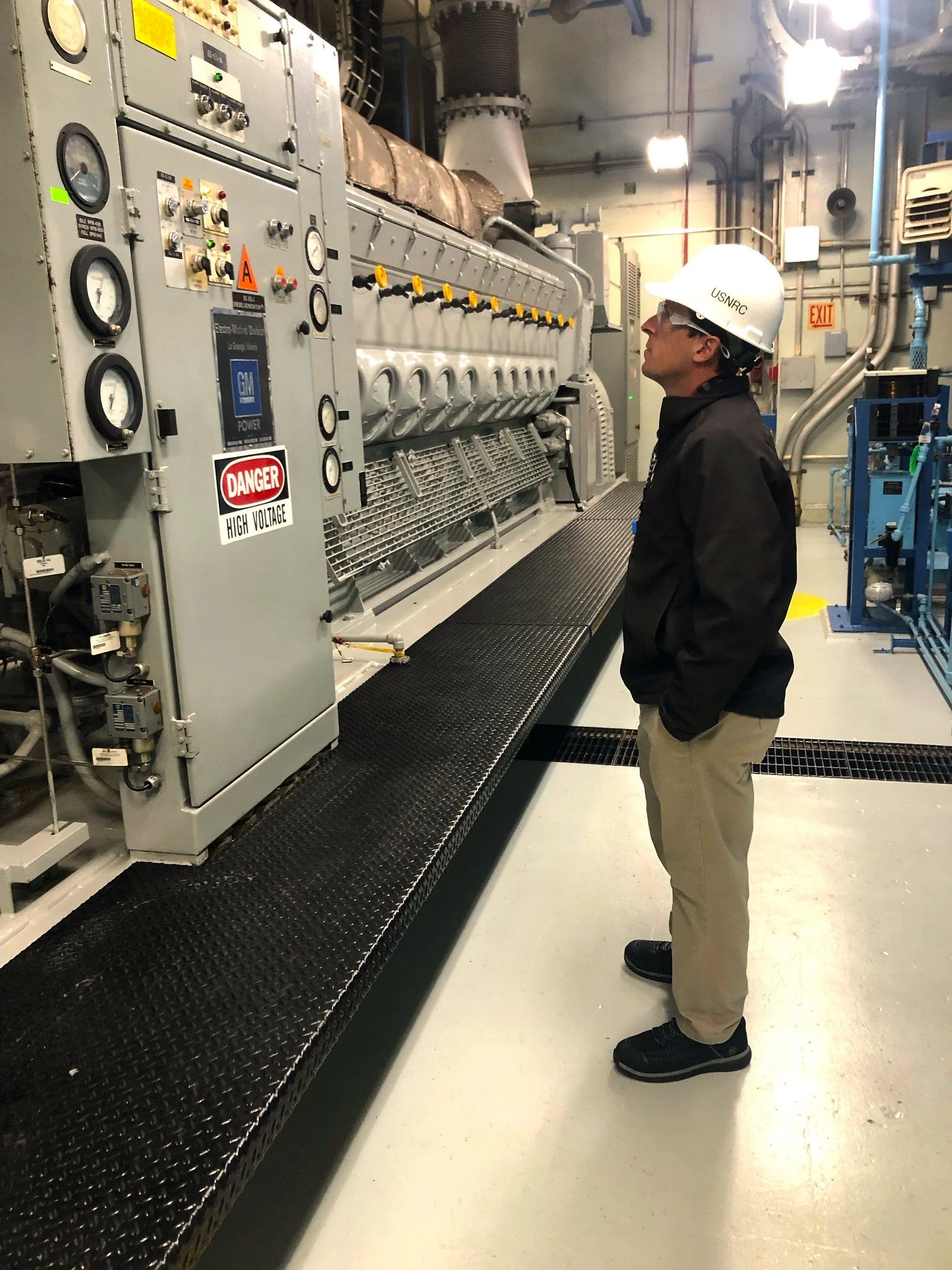
NRC Staff Inspects Emergency Diesel Generator at Beaver Valley Nuclear Power Plant. Source: Nuclear Regulatory Commission
Nuclear waste facilities have the potential to impact both people and the environment in the host community and in other communities nearby. Impacts can be positive or negative. While the likelihood of incidents and accidents may be small, they are never zero.
This page suggests how to think about potential risks and benefits from a proposed nuclear waste facility.
We use six categories of potential benefits and risks to organize a series of questions that the community should consider:
What are potential health and safety impacts to the community?
What are potential economic impacts to the community?
What are potential environmental impacts?
What are potential social impacts in the community?
What are potential governance impacts in the community?
What are potential cultural impacts in the community?
Impacts can arise from
direct outcomes due to the siting and operation of a facility and
indirect outcomes due to the siting and operation of a facility.
In some cases, the questions will be answered with “not likely to be a significant issue” but it’s still important to examine them for completeness. All the concerns that people might raise should be considered.
The community should draw on both expert knowledge and local knowledge to identify impacts. Keep in mind that it is important to identify both what impacts people are hopeful or worried about and what impacts scientists or professionals say people should be hopeful or worried about. Perceptions of lay people do not always match those of experts, but that does not mean the things that lay people care about are unimportant.
The information to help identify who might be impacted and how they might be impacted can be gathered from a number of sources, including:
Local residents and organizations
Experts from inside or outside of the community
Regional organizations and stakeholders
Reports and other published literature from credible sources
Government agency staff
Some suggestions about how to go about getting informed about potential risks and benefits are provided here.
Potential Health and Safety Impacts
Industrial sites that handle toxic and radioactive materials pose risks to public and occupational safety and health. It is important to explore how large the risks are and what can be done to mitigate them?
As a community considers a proposal to host a CSF, some questions to consider are:
What short-term and long-term radiological and non-radiological public health and safety risks are the federal and state governments considering and not considering (e.g., pollution from truck traffic)?
Are they looking at risks from routine operations as well as from incidents and accidents?
What short-term and long-term radiological and non-radiological occupational health and safety risks are the federal and state governments considering? Again, consider routine operations and Incidents/accidents.
How might hosting the facility provide benefits that can positively affect health and safety in the community (e.g., negotiation of a benefits package that provides funding for community health services)?
How might health risks vary during different phases of project development, operation, and decommissioning?
What procedures and standards are being used to estimate risks? Have the standards been recently changed to be more lenient or tougher?
What procedures are in place to manage casks or materials that arrive at the facility damaged?
What kinds of are and water monitoring systems are planned for potential on-site and off-site exposures?
These are just suggested questions. Your community may want to come up with its own set of questions.
Potential Economic Impacts

NRC 2023 Hiring Event. Source: Nuclear Regulatory Commission
A nuclear waste facility can bring economic benefits to a host community by providing jobs, demand for local business services and products, tax revenues, and other kinds of payments. It also has the potential to impose costs on the local community; for example, by placing new demands on local government services, increasing demand for utilities and housing (and possibly driving up prices).
Your community should carefully consider the potential direct and indirect economic benefits and costs, in both the short and long term. Some example questions to consider are:
What potential economic benefits and costs are federal and state governments considering to the local government, local businesses, and local residents? What are potential impacts from incidents and accidents? Are any costs omitted that the community might wish to consider?
How might a facility create local economic stimulation in the local or regional economy?
What kinds of jobs might be available by hosting the facility (types of jobs, number of jobs, compensation for jobs, duration of jobs, training for jobs, etc.)? How long will those jobs last? Are these jobs local people would be qualified to take?
What will be the implications of the facility for local tax rates and revenues?
Is there a potential that the community may be perceived in negative ways that can impact the local economy (i.e., stigma)?
What are the financial impacts of new demands on local governmental services from hosting a facility (emergency response, schools, roads, etc.)?
Does the facility have the potential to create future liabilities that the local community will be responsible for? What can your community do to protect itself from these liabilities?
All facilities will eventually need to be closed and decommissioned. Decommissioning is easy to ignore because it is often far into the future. However, communities that host waste facilities do not want to be left with costly responsibilities to clean up or decommission the site. A community should determine who has responsibilities for decommissioning and how the costs will be paid. Establishing a decommissioning fund that the community oversees might be worth exploring. Furthermore, can the community have an oversight role in the decommissioning process? Does it want that level of involvement?
Potential Environmental Impacts
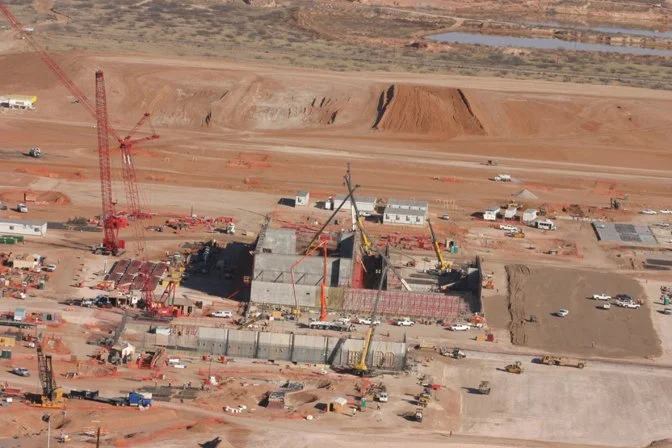
Construction at the LES site in New Mexico. Source: Nuclear Regulatory Commission
New industrial sites can impact the local environment. They may change traditional land uses in the area, such as convert open space or agricultural lands to an industrial site. Industrial sites that handle toxic and radioactive materials pose risks of releases to the environment as well. The questions are, how large are those risks? And what can be done to mitigate them?
What potential short-term and long-term environmental impacts (to soil, water, flora, fauna) are the federal and state governments considering? What about potential impacts from incidents and accidents? Are any omitted that the community might wish to consider?
How might risks vary during different phases of project development, operation, and decommissioning?
How might hosting the facility provide benefits that can positively affect the environment (e.g., creation of recreational areas)?
What are potential impacts on-site and off-site?
What standards are being used to estimate / assess risks?
What are anticipated water use requirements at the facility, and how may they impact the local environment?
What kinds of air and water monitoring systems are planned, for potential on-site and off-site exposures?
Potential Governance Impacts
Who in your community is interested in entering a process about hosting a waste facility? And, why? Who is opposed? And why?
What potential governance impacts are the federal and state governments considering? Are any omitted that the community might wish to consider?
How might the perceptions of the local government officials be affected (e.g., trust in government), which in turn could strengthen or weaken local government?
Potential Cultural Impacts
Are there potential impacts on historical land uses and activities (e.g., recreation)?
What cultural impacts are the federal and state governments considering? Are any omitted that the community might wish to consider?
What might be the negative impacts on historical or cultural sites of local or non-local Tribes or on other culturally-distinct groups in your community? What criteria or standards are being used to estimate / assess risks? (e.g., what is considered culturally significant?)
What could be negotiated to help mitigate these harms from happening or for compensating the relevant group for damages?
This website was created with funding from the US Department of Energy.



Potential Social Impacts
At the outset it can serve a community well to think about how conflicts amongst those with differing views will be managed. The community leaders and other stakeholders should be aware that simply signaling an interest in learning more about storing nuclear waste has the potential to generate conflict within a community. Some residents may promote and welcome a facility while others may be strongly opposed. A community certainly should avoid being pushed to express interest, making sure it is voluntarily exploring the opportunity with a right to withdraw at any time. These are issues worth considering.
Clinton Photo for Public Meeting Community Day. Source: Nuclear Regulatory Commission
Some example questions to consider include:
Who in your community is interested in entering a process about hosting a waste facility? What motivates them? Who is opposed? And why?
What potential social impacts are the federal and state governments considering? Are any omitted that the community might wish to consider?
How might risks vary during different phases of project development, operation, and decommissioning?
Will the facility significantly change the local population? What about the demographics? For example, will there be more children attending the local school?
How might relationships within the community be affected? For instance, after the Exxon Valdez oil spill in 1989, Exxon hired some local fishermen to help with the cleanup but refused to hire others. This led to animosity and conflict in the community. What can your community do to ensure opportunities to benefit from the waste facility are made available to all?
How might the perceptions of the local government officials be affected by hosting the facility or if an unwanted event occurs? For example, how would the community respond if trust in local government was damaged?
Is there a way to strengthen the social fabric of the community by building capacity and by engaging in community dialogues about hosting the facility?
Is there potential for the community or area to be stigmatized by hosting and facility - and what might be the implications for the local social fabric?
Back to Top